Konnect Reference Platform
Learn federated API platform management by example
The Konnect Reference Platform is a resource project with public example repositories that demonstrate an opinionated approach to federated API platform management with Kong Konnect. Read the docs, follow the workflows, and adapt the patterns to your own organization.
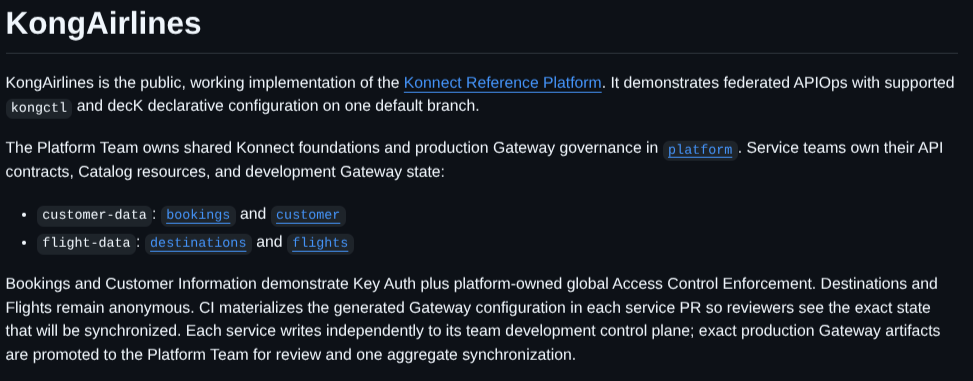
The example follows KongAirlines, a fictional airline whose service teams deliver APIs independently while a platform team manages shared infrastructure and production governance. It connects API design, automated delivery, developer discovery, and application access in one implementation you can explore.
Self-service API delivery with governance
Self-service for service teams
Give service teams the access and automation to manage their API contracts, catalog entries, documentation, and development Gateway configuration. Teams can build, test, and publish independently without making the platform team a dependency for every change.
Governance where it matters
The platform team defines access boundaries and manages shared infrastructure. Changes to critical production systems, such as the shared API Gateway, pass through platform review and approval. Service teams retain ownership of their APIs while production traffic remains governed.
Supported tools, readable examples
The project uses kongctl for Konnect configuration, decK for Gateway configuration, and GitHub Actions for automation. Explore how these tools support team ownership without introducing another platform tool.
Patterns you can adapt
This is one solution, not the only way to build an API platform. Explore its approach to development and production, API releases, and shared governance. Understand the decisions behind the example, then take the concepts that fit your organization and adapt them to your own needs.
Put API design first, with reviewable delivery
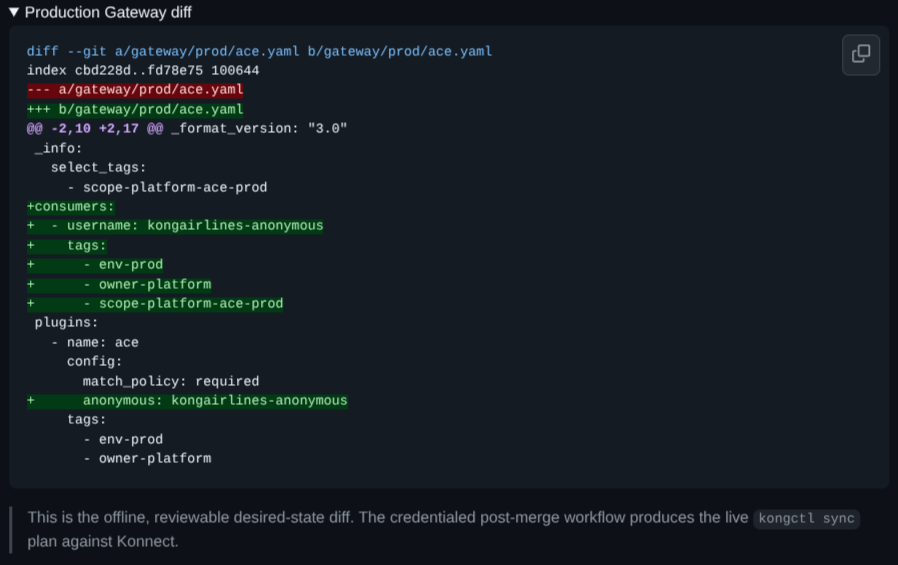
Follow an API-first workflow: start with an OpenAPI contract in a service repository, then let automation turn the design into deployable configuration. It validates the contract, generates Gateway configuration, and commits the result to the same pull request. Reviewers can inspect both the API change and the configuration that will be deployed.
Automated review comments summarize the changed inputs and show the generated Gateway differences. Production candidates then move to a platform pull request, making the handoff between service ownership and platform governance visible.
Follow an API change through the example.
Follow delivery from development to production
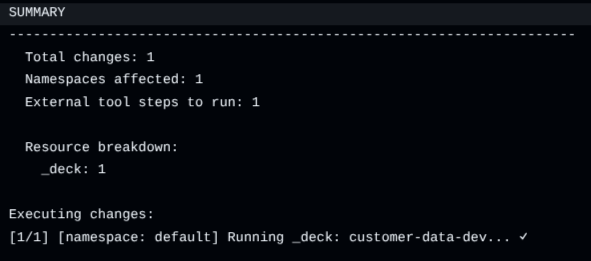
Service workflows update development environments, prepare releases, and propose production changes. Platform workflows manage shared foundations and the reviewed production Gateway configuration. After Gateway delivery succeeds, automation triggers the owning service’s production catalog workflow, with approval before deployment.
Read the workflow definitions and run history to see where validation, review, and deployment approvals fit together. The example keeps these steps in the repositories so you can learn from them and adapt them to your delivery process.
Connect API delivery to the developer experience
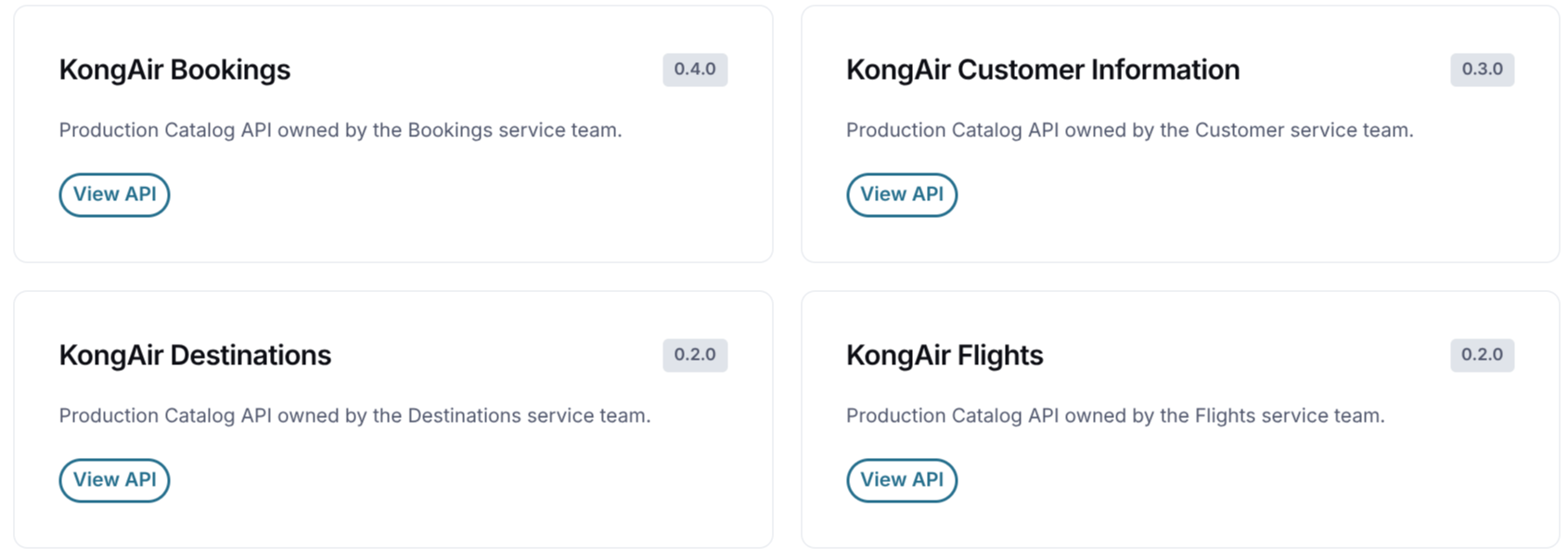
KongAirlines also demonstrates the consumer side of an API platform: branded Developer Portals, API discovery, onboarding guides, and application access requests.
Flights and Destinations illustrate public API access. Bookings and Customer Information illustrate protected access through approved Dev Portal applications and API keys. This gives you an example to study from both the API producer’s and API consumer’s perspective.
Explore the KongAirlines example for the implementation and its ownership model.
Explore with an AI assistant
The konnect-reference-platform skill in the Kong AI Marketplace gives an AI assistant guidance for understanding and adapting this federated ownership and delivery model. Use it alongside the documentation and repositories when exploring how these patterns fit your platform.
The skill is optional. You can learn from and use the example without an AI assistant.
Have more questions? Read the FAQ.